
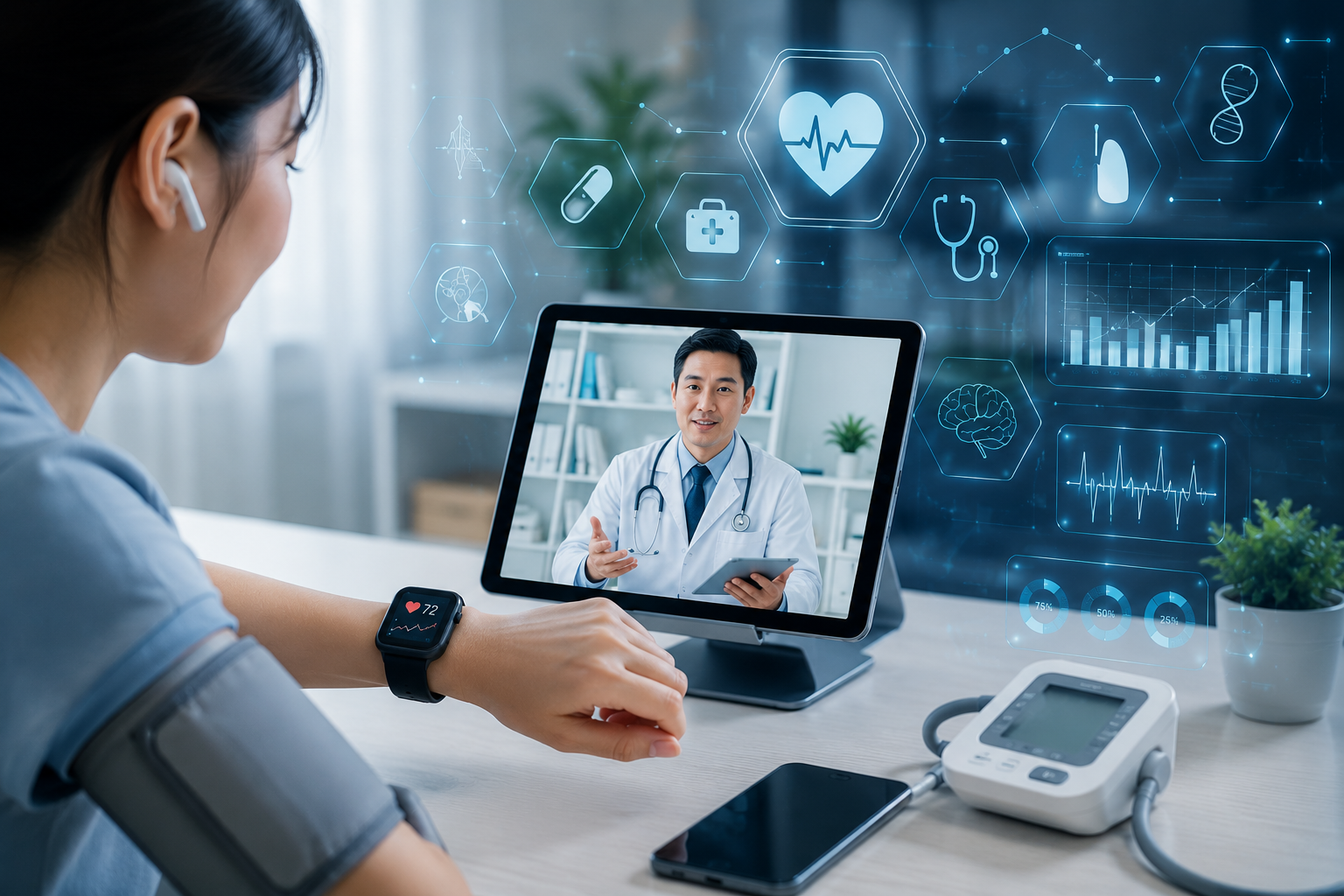
Digital health is transforming the way healthcare is delivered, experienced, and managed. From online appointment scheduling and telemedicine to electronic medical records and artificial intelligence (AI)-assisted diagnostics, digital technologies are redefining how patients interact with healthcare providers and access medical services.
Across Asia, healthcare systems are accelerating digital transformation to improve efficiency, expand access to care, and deliver more patient-centred services. Hospitals, governments, technology companies, and healthcare providers are investing in innovative digital solutions that not only enhance clinical outcomes but also improve the overall patient experience.
As healthcare continues to evolve, digital health is emerging as one of the most significant drivers of modern medicine.
A New Era of Connected Healthcare
Traditionally, patients were required to visit hospitals or clinics for nearly every stage of their healthcare journey—from registration and consultations to receiving test results and collecting prescriptions.
Today, digital technologies are streamlining these processes, allowing patients to access many healthcare services remotely through smartphones, tablets, or computers.
Many healthcare providers now offer digital services including:
- Online appointment booking
- Telemedicine consultations
- Electronic prescriptions
- Digital payment systems
- Online access to laboratory results
- Medication delivery services
- Patient health portals
These innovations reduce waiting times, improve convenience, and create a more seamless healthcare experience for patients.
Telemedicine Is Expanding Access to Care
Telemedicine has become one of the most impactful developments in digital healthcare.
Through secure video consultations and digital communication platforms, patients can connect with healthcare professionals without travelling to a medical facility. This has significantly improved access to healthcare for people living in rural communities, individuals with mobility limitations, elderly patients, and those managing chronic conditions.
Telemedicine also enables specialists to provide consultations across geographical boundaries, helping reduce disparities in healthcare access while improving continuity of care.
As digital infrastructure continues to improve across Asia, remote healthcare services are expected to become an increasingly important part of routine medical practice.
Electronic Medical Records Improve Clinical Efficiency
Electronic Medical Records (EMRs) have become a cornerstone of modern healthcare systems.
Unlike traditional paper records, EMRs provide healthcare professionals with immediate access to a patient’s medical history, laboratory results, diagnostic imaging, medication records, allergies, and previous treatments.
By consolidating patient information into a secure digital system, healthcare providers can make faster and more informed clinical decisions while reducing unnecessary duplicate testing and improving coordination between different medical departments.
The integration of electronic health information also supports better long-term patient management and enhances overall healthcare quality.
Artificial Intelligence Supports Better Decision-Making
Artificial intelligence is playing an increasingly important role in digital healthcare.
Healthcare organisations generate enormous amounts of data every day, including medical imaging, pathology reports, electronic health records, laboratory findings, and wearable device data. AI technologies are helping clinicians analyse this information more efficiently and accurately.
AI-assisted applications are being used to:
- Interpret medical imaging
- Identify disease patterns
- Predict patient risks
- Support clinical decision-making
- Optimise hospital workflows
- Improve early disease detection
While AI continues to advance rapidly, healthcare professionals remain at the centre of patient care. AI serves as a powerful decision-support tool that enhances clinical judgement rather than replacing medical expertise.
Wearable Technology Encourages Preventive Healthcare
Wearable health technologies have become increasingly popular among individuals seeking to take a more active role in managing their health.
Smartwatches, fitness trackers, and remote monitoring devices can continuously measure important health indicators such as:
- Heart rate
- Blood oxygen levels
- Physical activity
- Sleep quality
- Heart rhythm
- Blood glucose levels (with compatible devices)
These real-time insights allow patients to monitor their wellbeing more closely while enabling healthcare providers to track health trends and intervene earlier when necessary.
Wearable technologies are expected to play an even greater role in preventive healthcare and chronic disease management in the coming years.
Protecting Patient Data Remains a Priority
As digital healthcare expands, protecting sensitive medical information has become increasingly important.
Electronic health records, genetic information, and personal health data require robust cybersecurity measures to ensure patient privacy and maintain public trust.
Healthcare organisations are strengthening their digital infrastructure through:
- Advanced data encryption
- Secure authentication systems
- Cybersecurity monitoring
- Access control protocols
- Compliance with healthcare data regulations
Maintaining strong data protection standards will remain essential as healthcare systems become more digitally connected.
Putting Patients at the Centre of Healthcare
Digital health is shifting healthcare from a provider-centred model to a patient-centred approach.
Patients now have greater access to their own health information, enabling them to participate more actively in healthcare decisions and long-term health management.
By empowering individuals with digital tools and personalised health information, healthcare providers can foster stronger patient engagement, improve treatment adherence, and encourage healthier lifestyles.
This collaborative approach supports better health outcomes while strengthening the relationship between patients and healthcare professionals.
Looking Ahead
Emerging technologies such as artificial intelligence, cloud computing, 5G connectivity, the Internet of Things (IoT), and predictive analytics will continue to reshape healthcare over the coming decade.
Future healthcare systems are expected to become increasingly connected, intelligent, and personalised, enabling continuous health monitoring and proactive disease prevention beyond the traditional hospital setting.
Smart hospitals, virtual healthcare services, remote patient monitoring, and personalised digital health platforms are likely to become standard components of modern healthcare delivery.
Conclusion
Digital health is fundamentally transforming the patient experience by making healthcare more accessible, efficient, and personalised.
From telemedicine and electronic medical records to AI-assisted diagnostics and wearable health technologies, digital innovation is improving how patients receive care while supporting healthcare professionals in delivering better clinical outcomes.
As technology continues to evolve, digital health will remain at the forefront of healthcare transformation, helping build more connected, patient-centred, and sustainable healthcare systems across Asia and around the world.
OFFICIAL ASIA RECORD https://asiarecord.com/
ABOUT OFFICIAL ASIA RECORD HISTORY https://asiarecord.com/about/
OFFICIAL ASIA RECORD Nomination Process: https://asiarecord.com/application/
GET OFFICIAL ASIA RECORD https://asiarecord.com/faq/
FIND OFFICIAL ASIA RECORD https://asiarecord.com/contact-page/